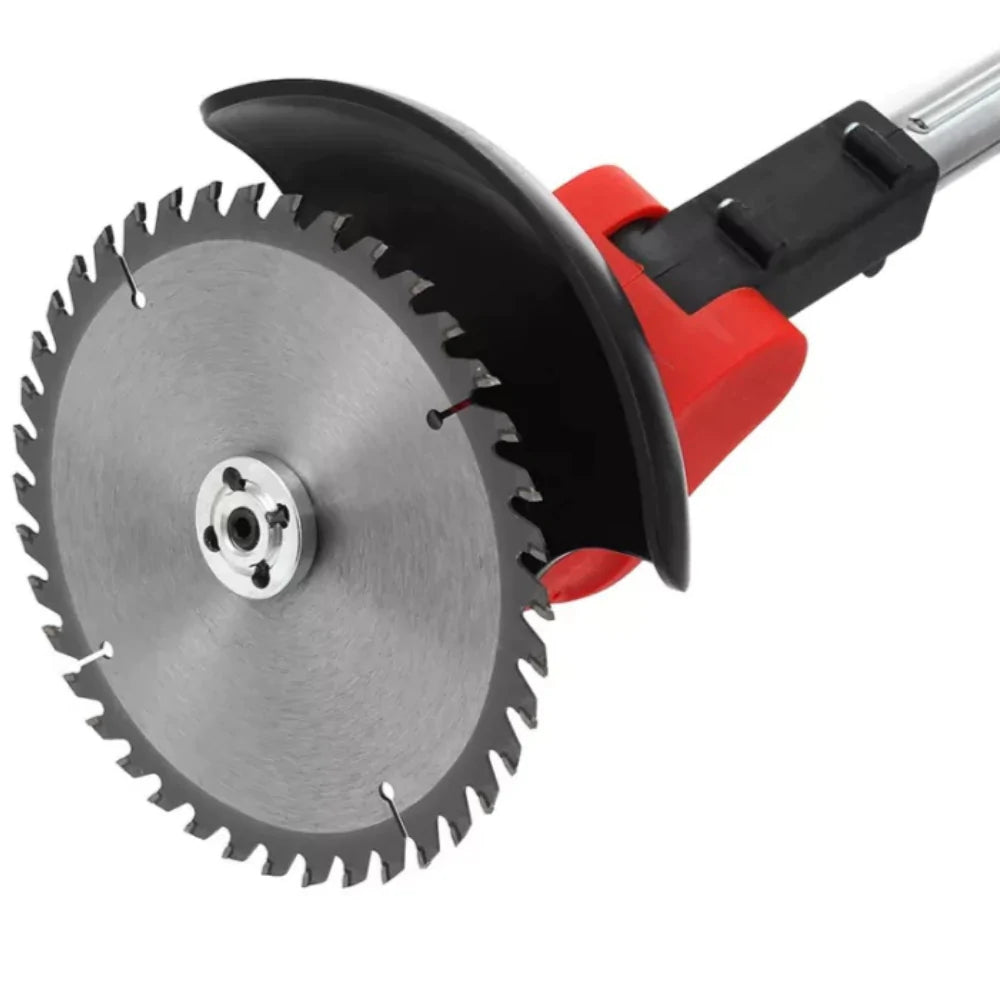


A string weed wacker is better for trimming soft grass and maintaining lawn edges, while a blade weed wacker is more suitable for cutting dense weeds and overgrown vegetation. Therefore, the better option depends on what you need to cut.
If you regularly deal with thicker weeds rather than ordinary lawn grass, a blade-based cordless tool such as the Grazer 24V Battery Operated Cordless Weed Trimmer can be a practical choice.

What Is a String Weed Wacker?
A string weed wacker uses a rapidly rotating nylon line to trim vegetation. The flexible line makes it suitable for routine lawn maintenance and areas where greater cutting precision is required.
A string trimmer is commonly used for:
-
Cutting soft grass
-
Trimming around trees and fences
-
Maintaining lawn borders
-
Cleaning pathway edges
-
Reaching corners that a lawn mower may miss
Because the nylon line is flexible, it is generally more suitable for working near hard surfaces and delicate landscaping than a rigid metal blade. However, the line can wear down or break and may struggle with dense or tough vegetation.
What Is a Blade Weed Wacker?
A blade weed wacker uses a rigid cutting blade instead of nylon line. It is designed to cut vegetation that may be too thick or demanding for a standard string trimmer.
A blade cutter is useful for:
-
Dense weeds
-
Overgrown grass
-
Tough vegetation
-
Larger patches of unwanted growth
-
Areas requiring stronger cutting action
Blade-based tools require careful handling. The correct blade must be installed securely, and the working area should be cleared of stones, wires, and other hard objects before use.

String vs Blade Weed Wacker: Key Differences
|
Feature |
String weed wacker |
Blade weed wacker |
|
Best suited for |
Soft grass and lawn edges |
Dense weeds and overgrown grass |
|
Cutting attachment |
Flexible nylon line |
Rigid cutting blade |
|
Cutting strength |
Suitable for light trimming |
Better for tougher vegetation |
|
Precision |
Useful around borders and obstacles |
Suitable for clearing thicker growth |
|
Maintenance |
String requires regular replacement |
Blade requires inspection and sharpening or replacement |
|
Handling |
Generally suitable for routine trimming |
Requires greater care and control |
|
Risk of surface damage |
Lower when used correctly |
Higher near fences, trees, and hard surfaces |
When Should You Choose a String Trimmer?
Choose a string weed wacker if your main goal is routine lawn care. It is suitable when you need to trim ordinary grass, define lawn edges, or work around trees, garden beds, fences, and pathways.
A string trimmer is also useful for areas where a rigid blade could damage nearby surfaces or plants. However, it may not be the most efficient choice for thick weeds or heavily overgrown areas.

When Should You Choose a Blade Weed Wacker?
Choose a blade weed wacker if you frequently need to clear dense weeds or overgrown grass. A rigid blade provides stronger cutting action than flexible nylon line and is less likely to be stopped by vegetation that is too tough for routine trimming.
The Grazer Weed Cutter comes with listed blade options for different weed- and grass-cutting requirements:
-
110 mm round blade
-
150 mm straight blade
-
6-inch blade variants
The correct blade should be selected according to the vegetation and used only as directed in the product instructions.
Why Consider the Grazer 24V Cordless Weed Cutter?
The Grazer Weed Cutter is designed for users who need cordless mobility and blade-based cutting for outdoor maintenance.
Its key specifications include:
-
24V power input
-
21,000 RPM no-load speed
-
2000mAh lithium battery
-
25-30 minutes of runtime per battery
-
Approximately 120 minutes of charging time
-
One-battery and two-battery options
-
Telescopic pole
-
Comfortable auxiliary handle
-
U-shape and D-shape handle options
-
Standard and wheeled variants
The cordless design allows users to move around lawns, gardens, fences, and pathways without managing an electrical cable.

Standard or Wheeled Grazer Weed Cutter?
The Grazer Weed Cutter is available in red and green, with both standard and wheeled configurations.
A standard model provides straightforward handheld portability. A wheeled variant can offer additional support while guiding the cutter over suitable ground. Users can also choose between one and two batteries depending on the amount of operating time required.
Which One Is Better for Your Yard?
Use this simple guide to decide:
-
For soft lawn grass: Choose a string weed wacker.
-
For neat lawn edges: A string trimmer is generally more suitable.
-
For dense weeds: Choose a blade weed wacker.
-
For overgrown grass: A blade cutter can provide stronger cutting action.
-
For mixed vegetation: Consider the primary type of growth you cut most frequently.
-
For longer cordless sessions: Choose a tool with an additional battery option.

Safety Considerations
Both string and blade weed wackers must be operated carefully. Wear protective eyewear, gloves, sturdy footwear, and appropriate clothing while cutting.
Before using a blade weed wacker:
-
Inspect the blade for damage.
-
Make sure the blade is installed correctly.
-
Remove stones, wires, and debris from the area.
-
Keep other people and animals away.
-
Turn off the machine before inspecting or changing the blade.
-
Follow the product’s operating instructions.
Final Verdict
So, which weed wacker is better, string or blade? A string weed wacker is better for soft grass, precise trimming, and regular lawn-edge maintenance. A blade weed wacker is better for dense weeds, overgrown grass, and vegetation that requires stronger cutting action.
For users who primarily need to manage weeds and overgrown grass, the Grazer 24V Battery Operated Cordless Weed Trimmer offers multiple blade options, 21,000 RPM no-load speed, cordless mobility, and a choice of standard or wheeled variants. The best option ultimately depends on the vegetation you need to cut-not simply whether one attachment is stronger than the other.