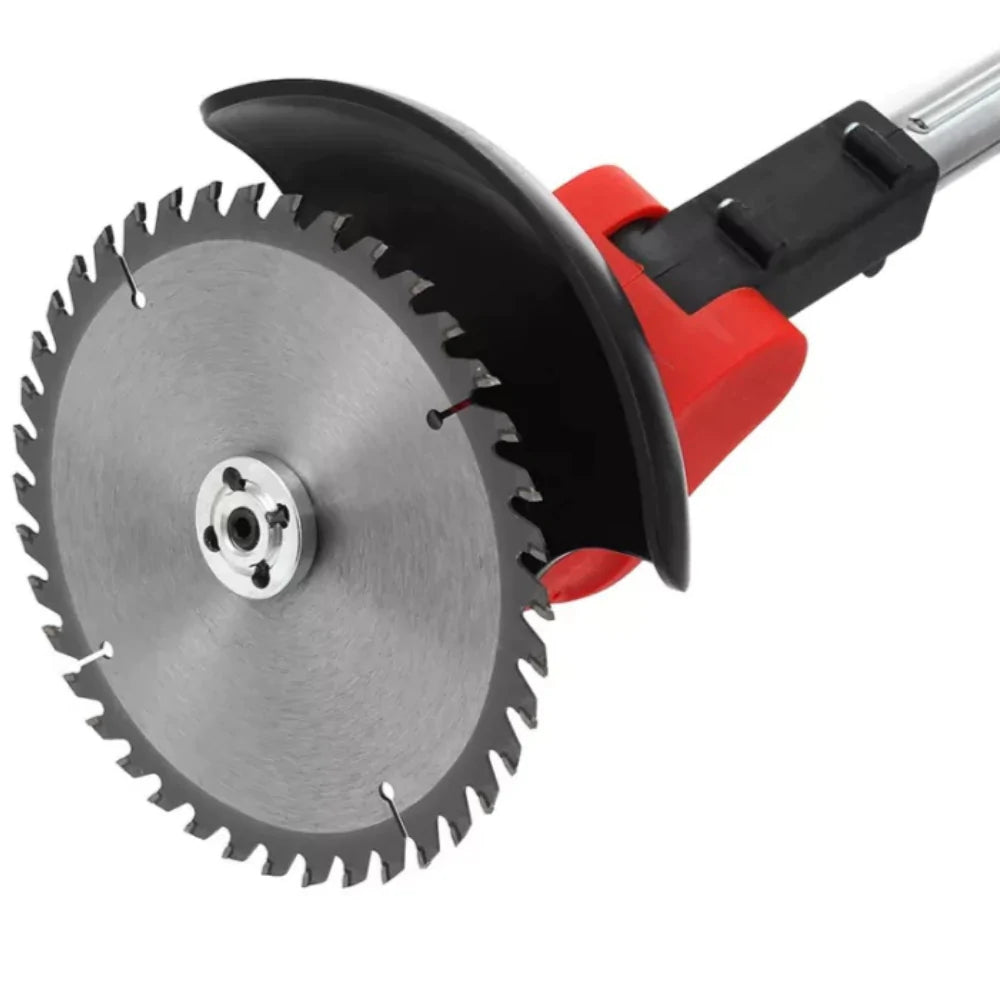


In most cases, there is no major difference between a trimmer and a weedeater. Both terms are commonly used for handheld garden tools that cut grass, weeds, and vegetation in places a lawn mower cannot easily reach.
The main difference is usually in the terminology. “Trimmer” is a general product category, while “weedeater” is an informal term commonly used for the same type of equipment.
However, not every trimmer has the same cutting attachment or capability. Understanding the different designs will help you choose the right tool for your garden.

What Is a Grass Trimmer?
A grass trimmer is designed primarily for cutting ordinary lawn grass and completing finishing work after mowing. It is often used in narrow or awkward areas, such as:
-
Along lawn borders
-
Around trees and flower beds
-
Beside walls and fences
-
Near pathways and steps
-
In corners a lawn mower cannot reach
Many conventional grass trimmers use a rotating nylon line. The flexible line is suitable for light trimming and detailed lawn maintenance.
What Is a Weedeater?
The term “weedeater” is often used to describe a grass or string trimmer used for removing weeds. Depending on the region, people may also call the same machine a:
-
Weed wacker
-
Weed trimmer
-
String trimmer
-
Line trimmer
-
Grass trimmer

These names are frequently used interchangeably. Therefore, a product described as a weedeater is not automatically a completely different machine from a trimmer.
The Cutting Attachment Makes the Real Difference
Instead of focusing only on the product’s name, check which type of cutting attachment it uses. This has a greater effect on its applications.
String or Line Trimmers
A string trimmer uses flexible nylon line and is generally suitable for:
-
Soft lawn grass
-
Light weeds
-
Lawn-edge finishing
-
Careful trimming near obstacles
The line gradually wears down and must be replaced or extended.
Blade Trimmers
A blade trimmer uses a rigid cutting attachment. It may be more appropriate for:
-
Overgrown grass
-
Denser weeds
-
Vegetation that is difficult for nylon line to cut
-
General clearing work within the tool’s recommended limits

Because the blade is rigid, the operator must use extra caution around trees, walls, fences, stones, and other hard surfaces.
What About a Brush Cutter?
A brush cutter belongs to a similar family of garden tools, but it is generally associated with blade-based cutting and tougher vegetation. Some multipurpose cordless machines may be described as a weed trimmer, grass cutter, or brush cutter depending on the attachment fitted.
Product names can therefore overlap. The safest approach is to compare the blade or line, power source, cutting capacity, and recommended applications rather than relying on the label alone.
Which Tool Should You Choose?
Your choice should depend on the vegetation you regularly maintain:
-
Choose a string trimmer for soft grass and precise lawn finishing.
-
Consider a blade trimmer for overgrown grass and denser weeds.
-
Select a cordless model if unrestricted movement is important.
-
Consider a wheeled configuration if you prefer additional support while guiding the tool.
-
Check the manufacturer’s instructions before using any attachment.
For a mixed garden, a versatile tool with an appropriate blade configuration may reduce the need for separate grass- and weed-cutting machines.

Where Does the Grazer Weed Cutter Fit?
The Grazer Weed Cutter - Battery Operated Cordless Weed Trimmer with 24V Battery can be described as a cordless weed trimmer or blade-based grass cutter. It is intended for grass and weed maintenance rather than only fine lawn-edge finishing.
It offers:
-
24V battery operation
-
21,000 RPM no-load speed
-
110 mm round and 150 mm straight blade options
-
Telescopic pole
-
Standard and wheeled variants
Its cordless format allows users to work around lawns, gardens, fences, and pathways without managing a power cable. The correct blade should always be selected according to the vegetation and product instructions.
Final Answer
A trimmer and a weedeater are usually two names for the same general type of garden tool. The practical difference comes from the machine’s cutting attachment and intended application-not from whether the seller calls it a trimmer or a weedeater.
For light grass and detailed edging, a nylon-line trimmer is usually appropriate. For overgrown grass and weeds, a blade-based model such as the Grazer 24V Cordless Weed Trimmer may be a more suitable option.